

An Italian Alternative to Luxury Watches
- Trifoglio Italia
- 5 days ago
- 5 min read
Updated: 3 days ago
A serious alternative to luxury watches is not a compromise disguised as a bargain. It is a different way of choosing: less concerned with a familiar name on the dial, more concerned with how a watch feels on the wrist, completes a jacket, and reflects the person wearing it. For men with a defined sense of style, the right timepiece should offer more than recognition. It should offer character.
The traditional luxury watch market has its appeal. Heritage, mechanical complexity, and enduring resale value all have a place. But those qualities often arrive with waiting lists, inflated secondary-market prices, and designs that can feel increasingly predictable. Not every occasion calls for a watch chosen to be recognized across a boardroom. Sometimes the more compelling choice is the one that starts a conversation.
What Makes a Real Alternative to Luxury Watches?
A watch does not need a four- or five-figure price to have presence. It needs a clear point of view. Design, proportion, finishing, color, and the relationship between case, dial, and strap all matter long before anyone asks where it was made or what it costs.
The best alternatives occupy a considered middle ground. They avoid the disposable feel of generic fashion watches, yet remain accessible enough to be worn rather than protected in a safe. This is where Italian design has a particular advantage. It understands that utility and expression are not opposing ideas. A watch can keep time with precision while still carrying the energy of an object chosen with intention.
For a professional who wears tailored clothing, a creative who favors architectural details, or a collector looking beyond the usual names, distinction often matters more than convention. The goal is not to imitate a famous luxury model. It is to wear something that feels personal.
Choose Design Identity Over Status Signals
Many mainstream luxury watches rely on instantly recognizable visual codes. That familiarity can be reassuring, but it can also narrow the field. If every watch in the room tells the same story, the one that takes a different approach earns attention naturally.
Look for a collection with its own design language. A refined rectangular case creates a different impression than a traditional round sports watch. An open-worked dial adds visual depth. An unexpected color palette can bring life to an otherwise formal look. A sculptural crown, layered indices, or an unusual case profile may seem like small choices, but together they establish identity.
This is why collection names matter when they are matched by real personality. Veloce suggests motion and confidence. Millimetro speaks to proportion and precision. Voyager carries a sense of movement and curiosity. Philosopher invites something more reflective, especially when its design leans into bolder, artistic details. A watch with a name should have a point of view behind it.
That point of view makes the watch easier to wear. A clean, restrained piece can sharpen a navy suit or a white shirt. A more expressive design can become the focal point of a dinner jacket, leather jacket, or knit polo. Neither approach is inherently better. It depends on whether you want the watch to whisper or speak first.
The Price Should Leave Room for a Life Well Lived
Luxury watches can be rewarding, but price changes the ownership experience. A timepiece that feels too precious may spend more time in its box than on the wrist. For many men, that defeats the purpose. A watch is made to collect marks from real life: a client dinner, a weekend trip, a wedding, the first day in a new role.
An accessible premium watch gives you more freedom. It can be part of a considered wardrobe without becoming the entire wardrobe budget. It can be selected for its design rather than its resale chart. It can also make a memorable gift because the gesture feels generous without demanding the financial weight of a traditional luxury purchase.
This does not mean price is irrelevant. Materials, assembly, movement reliability, and finishing should still earn their place. The difference is that value should be measured by the total experience, not by scarcity alone. Does the watch have visual authority? Is it comfortable enough to wear all day? Does it look equally convincing at a gallery opening, a business meeting, or an evening reservation? Those are more useful questions than whether it carries the expected name.
Italian Design Brings a Different Kind of Confidence
Italian design is often associated with fashion, but its deeper strength is proportion. The best Italian objects understand balance. They know when a line should be clean, when a detail should be dramatic, and when restraint makes a bold element more effective.
In a watch, that philosophy shows up in the dialogue between classic timekeeping and contemporary form. A traditional leather strap can ground a modern dial. A polished case can frame an unconventional display. Deep blue, warm brown, black, silver, and rich green each shift the watch's personality without requiring excessive ornament.
Trifoglio Italia approaches this territory with watches designed as expressive objects, not generic accessories. Its collections offer distinct moods rather than variations of the same formula, giving a man the opportunity to choose a piece that suits his own style rather than a standard idea of luxury.
For the buyer who appreciates design, this is a more satisfying proposition than a watch that merely signals entry into a category. It is confidence without the need for approval. The watch looks intentional because it was chosen intentionally.
How to Select the Right Watch for Your Style
Start with the role the watch will play. If you need one piece that can move through most of your week, favor a versatile case size, a composed dial, and a neutral strap or bracelet. Black, brown, navy, and silver remain easy companions for tailoring and casual layers alike.
If you already own a dependable everyday watch, your next piece can be more expressive. Consider a dial with dimensional architecture, a color that stands apart from your usual rotation, or a case shape that breaks from the standard round profile. This is often where a design-forward alternative offers the most enjoyment. It gives your wardrobe a new note rather than repeating one you already own.
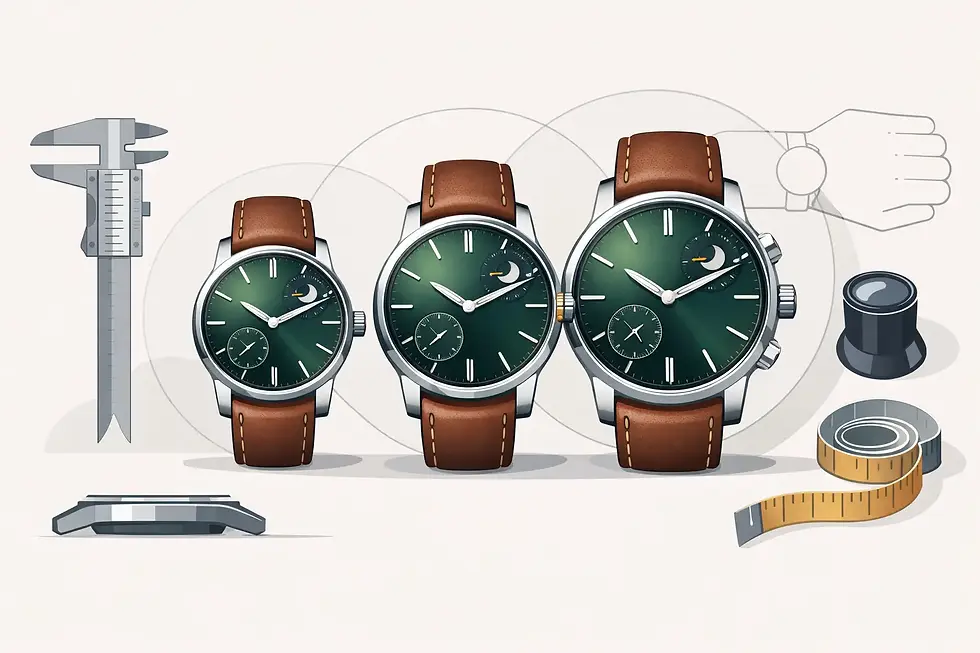
Pay attention to proportion, especially when shopping online. A bold dial can still look refined if the case is balanced. A compact profile can feel more elegant than an oversized watch, particularly with a dress shirt or fitted sleeve. Conversely, a larger, more graphic watch may be exactly right for relaxed tailoring, denim, or a weekend look. The right scale depends on your wrist, your clothing, and how much visual presence you prefer.
Finally, resist buying solely for presumed versatility. The watch you wear most is often the one that makes you feel most like yourself. A distinctive design may not match every outfit, but it can make the outfits it does match feel more complete.
A Better Alternative Is Not a Lookalike
The most compelling alternative to luxury watches does not borrow another brand's silhouette and hope the price makes up the difference. It creates its own appeal through considered design and a clear sense of purpose.
There is nothing wrong with wanting heritage, mechanical pedigree, or investment potential. Those are valid reasons to buy a traditional luxury watch. But they are not the only reasons to wear a beautiful one. If your priorities are individuality, Italian design, craftsmanship, and the pleasure of wearing something less expected, a design-led timepiece can be the more meaningful choice.
Choose the watch that earns a second look because it has character, then wear it often enough for that character to become part of your own.


Comments